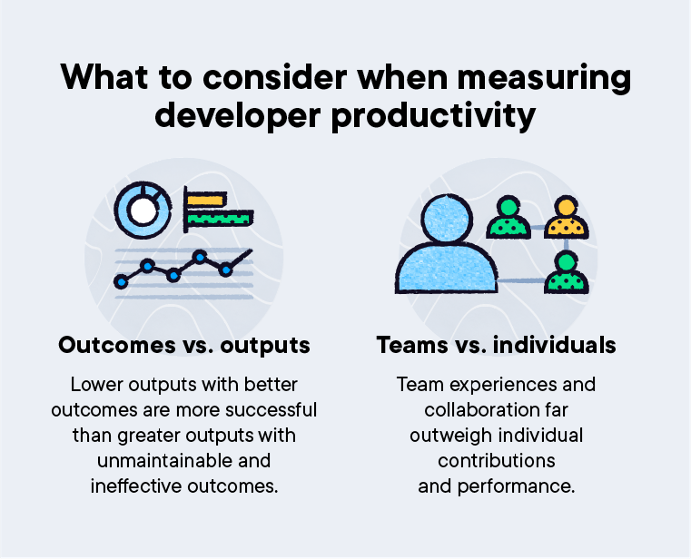
It doesn’t matter how many pizza parties you throw or codes of line you produce — a business without a production-culture balance is likely to experience burnout, dips in product quality, and other forms of tension.
Maintaining development velocity, quality products, and accelerated completion and delivery times without sacrificing team health and work balance is vital to businesses dependent on software outcomes for success. However, it’s nearly impossible to balance these metrics and culture expectations without real-time data and proactive development methods.
Code correctness, maintainability, and readability are the three biggest indicators of a successful coder, but they can also indicate developer productivity. Measuring these metrics and others helps leaders simultaneously quantify their team’s activities and change or prioritize certain outcomes. Our guide to developer productivity dives into its pitfalls, explores the Developer Thriving framework, and uncovers improvement opportunities for all teams.
Table of contents:
Developer productivity measures a development team’s ability to produce and deliver adept code directly related to a company’s business outcomes. It can be calculated within any timeframe using various metrics, focusing on real-time team productivity rather than individual productivity.
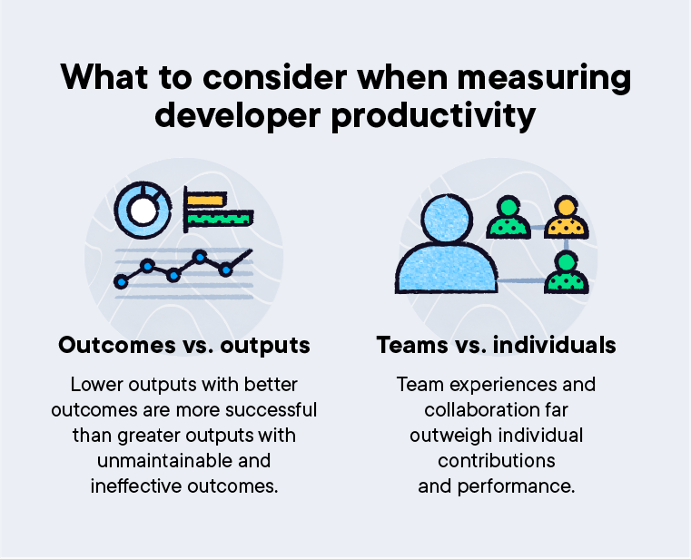
It’s possible for a developer to output 100 lines of code a day—but what’s the point if the code is useless, broken, or incomplete? A developer’s output does not create a true holistic picture of productivity because the amount of product created and the actual value added are two entirely different things.
Instead of measuring outputs, developer productivity needs to measure outcomes. Did your developer create 20 lines of code that worked and is maintainable? If so, this highly effective lower output greatly exceeds ineffective higher output. Teams can build upon these outcomes, propelling them toward improvement and greater business success.
Instead of focusing on individual productivity—namely, each worker’s output—developer productivity should measure the experiences of an entire team. Developer productivity increases when pain points and frustrations are resolved on a team level, prioritizing the overall organization and structure of the work rather than individual nuances.
Instead of tracking individual metrics like number of commits and average commit size, analyze team metrics like:
Remember to interpret the outcomes of these metrics in the context of team performance. While they can also measure individual performance, developer productivity will be inaccurate without considering the complexity of team work.
Leaders often experience challenges when measuring productivity, especially two measurement traps uniquely connected to the Developer Thriving framework:
In addition to these challenges, teams and leaders may experience slower progress and other pitfalls when measuring productivity. These additional pitfalls include:
Developer productivity is frequently measured using standard DevOps metrics. While these can successfully support productivity estimates, specific metrics are best suited for obtaining insight into team productivity and performance, including DORA metrics and the SPACE framework.
The DORA metrics used to analyze engineering and software teams are widely considered the standard for tracking developer productivity. DORA is the longest-running software delivery and internal operations research program of its kind, specially designed to track:
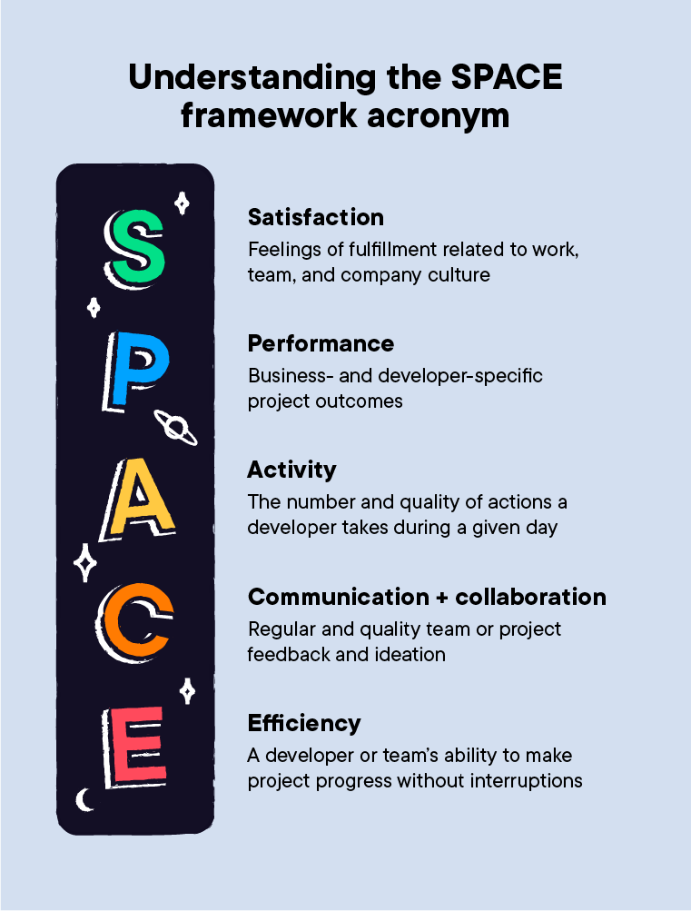
The SPACE framework was designed by researchers from GitHub, the University of Victoria, and Microsoft Research to give managers a holistic view of developer productivity. This framework intentionally dispels productivity myths and provides an in-depth look into development teams' activities, needs, and successes.
Each letter of the acronym represents an element necessary to effectively and completely measure internal productivity:
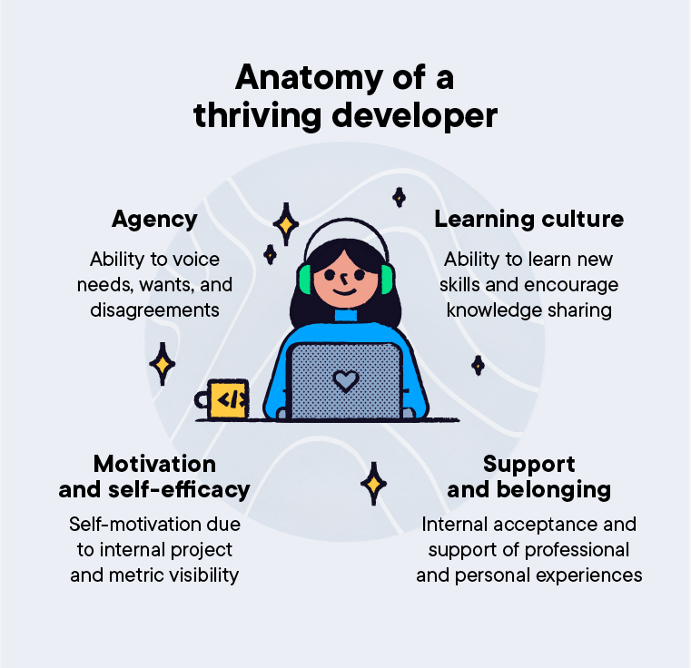
The Developer Thriving framework is a new approach designed to improve the health and efficiency of development teams. Researched by the Developer Success Lab at Pluralsight Flow, this four-factor framework was developed from qualitative and quantitative data gathered from 1,282 developers over 15 hours.
The Developer Thriving framework tracks four key factors, or levers, that measure efficiency and satisfaction, which fosters improved developer productivity. These levers, which provide insights into developer experiences, environments, learning cultures, and strategies, include:
Visibility is a two-way street. Managers need to be open to engaging in top-down visibility, where they relay information to other leaders or team members who then pass on the information further. This type of visibility should include insights into project and organizational updates, metric tracking, and internal recognition of teams and individuals.
On the other hand, leaders should also be open to bottom-up visibility, which allows team members to engage in conversations with their superiors about working conditions, project concerns, resource allocation, and other organizational needs. When both forms of visibility are prioritized, organizations can experience benefits like:
One of the biggest challenges with measuring developer productivity lies between healthy metrics and vanity metrics. For most development teams, the metrics used to measure productivity are frequently tracked, archived, and replaced with new ones. This metric churn can increase the use of vanity metrics, which are often easier to track and produce compelling results. However, vanity metrics usually prioritize shallow productivity measures like outputs and number of commits.
When developer productivity is measured using substandard metrics, efficiency misconceptions and poor developer experiences arise. This also occurs when measurements focus on individual tracking rather than a holistic team perspective. To guarantee accurate productivity tracking, leaders need to focus measurement efforts on healthy team metrics that prioritize team productivity and efficiency rather than individual experiences.
Healthy metrics
Measurements focused on work and project outcomes, including:
Vanity metrics
Measurements focused on an individual’s input or output, including:
Improving developer productivity is crucial to enhancing team health and employee retention. When used in tandem with the frameworks covered above, these six improvement tips encourage team productivity.
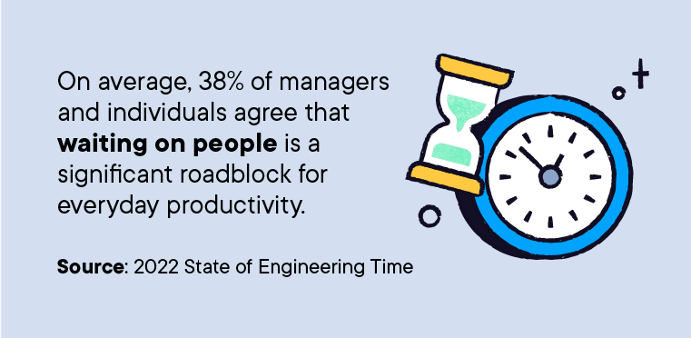
Even in teams with high developer productivity measurements, knowledge sharing is crucial. Teams that prioritize learning, create channels for internal feedback, and produce discussions dedicated to problem-solving experience increased levels of code velocity and decreased team roadblocks. Knowledge sharing also boosts internal team trust and can improve bonds across multiple teams.
Productivity and other crucial business outcomes rely on developer experiences. Supported developers who receive technical support, professional development training, and streamlined tools are more likely to produce higher-quality products and increase individual and team productivity.
According to the Developer Thriving framework, different experiences for minoritized developers have a significant impact on performance, team success, and company visibility. So, making developer experiences a priority benefits individuals, teams, and companies as a whole.
Employee satisfaction and retention—two key factors of developer productivity—are positively impacted by internal recognition. Individual and team self-confidence also improves, which influences developer motivation. Visibility and work advocation for project launches and other forms of business impact also directly correlate with improved developer productivity.
Transparency is necessary for all forms of productivity measurement. Be forthright about why, how, and which metrics you are tracking. This allows everyone to know what they are working toward, why their progress matters, and how effective they are. Transparency and visibility also increase organizational and team trust, which can impact accountability.
If you’re tracking developer productivity metrics, your reporting needs consistency. Measurement consistency is crucial to understanding team member actions and prioritizing transparency, so these practices need to be consistent across teams. Consider auditing your organization’s metrics to ensure all teams are tracking the same metrics across the board.
Technical debt can significantly impact team productivity. When teams prioritize broken or suboptimal projects, developers may experience tight deadlines, poor code reviews, and convoluted refactoring. By allocating time and resources for maintenance, teams can improve productivity standards without sacrificing project quality.